


Hair fall is one of the more common hair concerns, but addressing it isn’t quite as easy as changing your shampoo or reaching for another hair growth serum. The hard part is figuring out the root cause of your hair loss. If you are unsure where to begin, a trichology service can help you identify what is happening beneath the scalp.
In some cases, sudden hair loss occurs due to stress, illness, nutritional deficiencies, or hormone imbalance. In others, a slow overall reduction of hair strands may be due to a hereditary condition like androgenetic alopecia. Both conditions may be indistinguishable at first but demand different treatment.
The silver lining is that most hair loss can be treated when detected early and diagnosed appropriately. Whether you have hair fall due to medical conditions or the use of certain medicines, or you are seeking a more permanent solution using medical treatments like minoxidil, Platelet-Rich Plasma (PRP), and GFC therapy, there are treatments available to address your concern.
This guide will tell you what causes hair loss, how dermatologists diagnose it, and which hair fall treatment options are worth your time.
What Are the Hair Fall Reasons?
Hair grows in three phases of the hair growth cycle: the anagen phase (growing phase), the catagen phase (transition phase), and the telogen phase (resting phase). Because of this natural structure, every hair you lose has been resting for a while. At the end of the telogen phase, the hair sheds and new growth begins.
Losing 50 to 100 hairs a day is normal. Excessive hair fall leading to bald patches or thinning of hair strands may be the first sign of a problem.
These are some possible reasons for excessive hair loss:
1. Nutritional Deficiencies
Your hair needs certain nutrients to thrive. If you are lacking in iron, protein, zinc, or other vital nutrients, you may experience hair thinning and shedding.
Not nourishing your body through crash dieting, restrictive eating patterns, or quick weight loss can stop the cycle of hair growth. The cycle can be restored by correcting the deficiency identified, either through dietary changes or an appropriate supplement.
2. Stress and Telogen Effluvium
Have you observed excessive hair loss a few months after recovering from illness, emotional stress, or surgery?
This could be telogen effluvium, a condition where a larger-than-normal number of hair roots enter a resting phase. Common triggers include:
- Serious health conditions.
- Severe fever or disease.
- Childbirth and hormone changes.
- Major surgery.
- Weight loss or nutrient deficiencies.
Hair shedding typically becomes noticeable a few months after the triggering event. In many cases, hair growth gradually recovers once the underlying trigger is addressed.
3. Hormonal Changes
Men and women can also have different hair growth patterns. Repeated shedding could be linked to events like pregnancy, childbirth, menopause, and hormonal imbalances such as Polycystic Ovary Syndrome (PCOS). These affect not only the uterus but also the hair.
The reason for hair fall in women is not always the same. Some women may experience permanent hair loss after pregnancy, while others have progressive hair thinning due to genetics or hormonal changes.
4. Androgenetic Alopecia (Genetic Hair Loss)
What is androgenetic alopecia? Also known as male or female pattern hair loss, it is a hereditary disorder. It happens when genetically sensitive hair follicles slowly regress, resulting in hair becoming thinner and shorter over time.
In men, this may appear as a receding hairline or thinning at the crown of the head. In women, it usually shows as a widening parting with general thinning across the scalp.
This is a progressive condition that usually needs ongoing androgenetic alopecia treatment.
5. Scalp Conditions and Hair Damage
When the hair roots do not find a well-balanced scalp, it can lead to hair thinning or damage. Frequent dandruff, inflammation, ringworm, and other scalp diseases can interfere with hair growth. Persistent flaking and redness may also be linked to scalp psoriasis, which needs its own clinical approach.
Repeated use of heat tools, chemical processing, tight hairstyles, and rough handling can cause hair breakage or traction alopecia. Maintaining scalp health is important, but it cannot independently reverse genetic or hormonal hair loss.
Note: Ringworm and other fungal scalp infections need a proper diagnosis. Learn more about fungal infection treatment at Skinstitute.
How Is the Actual Cause of Hair Fall Diagnosed?
Before choosing a hair fall solution, it is important to identify whether the problem involves excessive shedding, follicular miniaturization, scalp inflammation, or hair breakage. A dermatologist or hair specialist may recommend the following:
- Medical history: Understanding recent illnesses, stress, medications, dietary habits, family history, and hormonal changes.
- Scalp examination: Looking for signs of inflammation, dandruff, balding patches, thinning, and similar concerns.
- Trichoscopy: Inspection of the hair follicle, scalp, and changes in hair caliber through a special magnification device. Advanced dermoscopy tools are used for this purpose.
- Blood tests: If you have any symptoms, your doctor can test your iron levels, thyroid levels, vitamin levels, or hormones.
- Scalp biopsy: Occasionally recommended for an uncertain diagnosis or if a scarring form of hair loss is suspected.
Additional tests are not required in every case. These tests are done at the discretion of your dermatologist after analyzing your symptoms and examination findings. A thorough first consultation helps decide which tests are actually needed.
Which Hair Fall Treatments Actually Work?
No single treatment is effective for all types of hair loss. The best method depends on the root cause, the health of the hair follicles, and how soon treatment is started. Below are some of the generally suggested treatments.
1. Minoxidil: A Medical Approach to Hair Regrowth
Minoxidil is one of the most established treatments for androgenetic alopecia. It works by supporting hair growth and helping maintain existing hair density. It is applied topically and can be prescribed for both male and female pattern hair loss.
It can be a slow process. Results may not be seen for six to twelve months of daily application, and ongoing use may be needed to sustain the effects.
What are the side effects of minoxidil? A temporary increase in hair shedding may be noticed during the initial few weeks of treatment. Minoxidil should be used under proper medical supervision during pregnancy and breastfeeding.
2. Platelet-Rich Plasma (PRP) Therapy
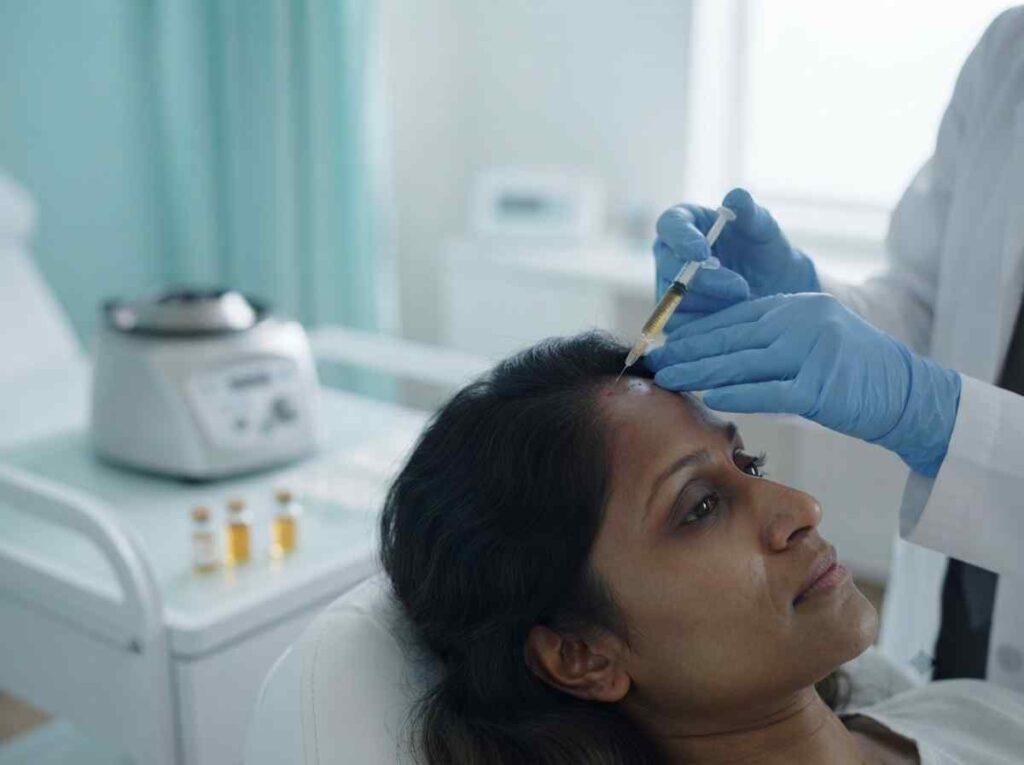
PRP is a non-surgical treatment that uses elements found in the patient’s own blood. A blood sample is taken in the clinic and spun in a centrifuge to separate the platelet-rich plasma, which is then injected into different areas of the scalp.
Growth factors in platelets may aid tissue healing and promote the activity of hair follicles. PRP may be used for patients with early pattern hair loss or other forms of thinning. Several sessions may be necessary, with further treatments based on the response. Results are not guaranteed every time, so PRP may not be the right choice for every kind of hair loss. You can explore our detailed PRP hair treatment page for more information.
3. GFC (Growth Factor Concentrate) Therapy
GFC is another regenerative therapy. In this method, a concentrated mixture of growth factors is derived from the patient’s blood and injected into specific areas of the scalp to promote a healthier follicle environment.
Despite the increasing use of GFC as a hair fall treatment, there is not yet enough clinical evidence about its benefits. Its use depends on the patient’s condition, and you should set realistic expectations with your dermatologist. To understand how it compares with PRP, read our guide on GFC vs PRP hair treatment. You can also learn about our GFC hair treatment service.
4. Exosome Therapy
Exosome therapy is a new class of potential treatment. Exosomes are nanosized vesicles released by cells to communicate. Scientists are investigating their use in hair research to determine their ability to promote follicle activity and tissue regeneration.
However, exosome-based hair treatments are still in experimental stages, with limited standardized clinical evidence and regulatory challenges. They should not be marketed or promoted as something guaranteed or proven to work. A dermatologist can assess whether these are suitable options or whether more established procedures are more appropriate. Read more about exosome treatment at Skinstitute.
5. Treating the Underlying Scalp Condition
Sometimes, we need to treat the scalp and not just the hair. For example:
- Some medicated shampoos can control certain types of dandruff.
- Depending on the severity of the condition, your doctor may prescribe an antifungal medication.
- Some cases of scalp inflammation can be treated with anti-inflammatory medications.
- Nutritional deficiencies should be treated to support recovery if they are contributing to shedding.
- In some cases, scalp laser therapy may be recommended as part of a broader plan.
The key is to treat the root of the problem.
When to See a Hair Specialist
Regular hair loss is common, but there are some changes you should not overlook. Consider booking a consultation with a hair specialist or a dermatologist if you observe:
- Recurrent or ongoing hair shedding.
- A thinning or receding hairline, or a gradually broadening hair part.
- Bald patches that develop suddenly.
- Hair gradually thinning even though you are using different products.
- A scalp that is itchy, red, scaly, or inflamed.
- Hair loss along with hormonal imbalances or other unexplained symptoms.
The earlier the assessment, the better, especially when hair loss is progressing or when your scalp is sore and inflamed. Permanent damage to hair follicles can occur if treatment is delayed. Our dermatologists can evaluate your hair and scalp together.
How Can You Maintain Healthy Hair and Scalp?
Hair needs continuous care to get the best results from professional therapy. A few practical measures include:
- Eat a healthy diet: Include a balanced diet with sufficient protein, good iron content, and other essential nutrients.
- Limit heat styling: Regular straightening and blow-drying on high heat create weak spots in the hair.
- Use gentle hair care products: Choose products that are compatible with your scalp and hair type.
- Avoid tight styles: Hair-pulling styles can damage follicles over time.
- Reduce stress: Enough sleep, exercise, and stress management support every dimension of health.
- Follow directions: Consistent use brings better results than constantly switching products.
While proper hair care can minimize damage caused by hair loss, it cannot counteract the effects of genetic or hormonal conditions.
Key Takeaways
- Normal people lose between 50 and 100 hairs per day.
- Stress, hormonal imbalance, genetics, and dietary deficiencies are responsible for a large share of hair fall.
- Telogen effluvium is usually temporary, while miniaturization in androgenetic alopecia tends to worsen gradually.
- Minoxidil is a proven treatment for pattern hair loss, and PRP and GFC may be used in selected cases.
- Exosome therapy is still experimental, with limited clinical evidence.
- Early diagnosis and treatment can improve the results for hair loss. A good skin doctor can guide you through this process.

Conclusion
The first step to managing hair fall is understanding what is going on under the scalp. Treating only the outside without addressing the inside may work against you.
Our trichology services at Skinstitute include a hair and scalp check and a personalized hair restoration plan, including PRP, GFC, and other non-invasive forms of hair restoration. Whether you are looking to treat excessive hair loss, identify the signs of progressing hair loss, or check for early signs of genetic hair loss, a consultation can guide you in the right direction.
If you are comparing options, our skin specialist services guide explains what a complete care plan looks like. You can also browse patient reviews to see how others have experienced our care.
Book a consultation at Skinstitute, Bhubaneswar, and take an informed step towards healthier hair.
Frequently Asked Questions (FAQs)
Hair fall can have several causes, including stress, hormonal changes, nutritional deficiencies, and genetics. Androgenetic alopecia is one of the most common long-term causes.
Yes, losing 50 to 100 hairs a day is considered normal. Concern arises when you notice bald patches, widening partings, or persistent thinning.
Yes, minoxidil can be prescribed for female pattern hair loss, but results usually take six to twelve months of consistent use and should be supervised by a doctor.
Neither is universally better. PRP is well established for early thinning, while GFC is used in selected cases, and a dermatologist can recommend the right option for your hair loss stage.
See a hair specialist if hair loss is ongoing, patches appear suddenly, the hairline is receding, or your scalp is itchy, red, or inflamed.
