


Making that initial decision to attend a skin clinic can be an exciting yet somewhat scary endeavour. Whether you struggle with resistant breakouts, have unexplainable skin pigmentation, or simply want to improve your current complexion, getting a professional consultation is the right way to start towards healthy skin. Delaying the appointment because you do not know what goes on in a skin clinic is common.
The latest in a skin clinic takes more than just a typical day spa experience. This is where science meets customized skincare in order to pinpoint issues that cannot be seen with an untrained eye. Understanding the whole process of visiting a dermatology clinic takes away stress and helps you make an informed decision regarding the condition of your skin.
Why Book a Professional Skin Consultation?
A visit to a skin clinic offers a higher degree of precision and diagnostic expertise compared to the at-home products available for skincare treatment.
Diagnostic Expertise for Specific Conditions:
- Determining the underlying causes of problems such as rosacea, melasma, or acne rather than dealing only with symptoms.
- Receiving an accurate skin health diagnosis from credible clinical findings instead of online experiments.
- Using prescription-strength topical and medical-quality clinical technology.
Preventive Care and Barrier Protection:
- Detection of minor sun damage, early development of fine lines, and collagen depletion in its early stages before it becomes visible.
- Protection from using too many products that may impair your moisture barrier.
- Customization of your regimen according to your local weather and personal needs.
A visit to the skin clinic guarantees you get value for your money and time spent.
Preparing for Your First Skin Clinic Visit
The process of visiting a skin clinic starts way before you step into the reception area. The right preparation guarantees that your practitioner will see the true state of your skin.
Record Your Current Regimen:
- Photograph or record the precise names of your cleanser, serums, moisturizer, and sunscreen.
- Write down all the ingredients that you use daily, such as retinol, salicylic acid, and glycolic acid.
Collect Your Medical Information:
- Enumerate the current list of oral medicines, hormones and other known allergies.
- Enumerate the history of any cosmetic procedures done or reaction to any skin care product.
Show Up Clean:
- Do not use thick make-up or tanning lotions when visiting the dermatology clinic.
- Use a non-stripping cleanser to clean your face two hours before your dermatology appointment.
As you come well-prepared for the skin clinic, your specialist will be able to spend more time analyzing your skin instead of cleaning off the cosmetics. Our guide on how to choose the right skin specialist can also help you know what to look for before booking.
The Complete Step-by-Step Skin Consultation Process
A reliable skin clinic always follows a certain process that is clear in the first appointment to make sure that the process is safe and accurate.
1. Medical and Lifestyle History
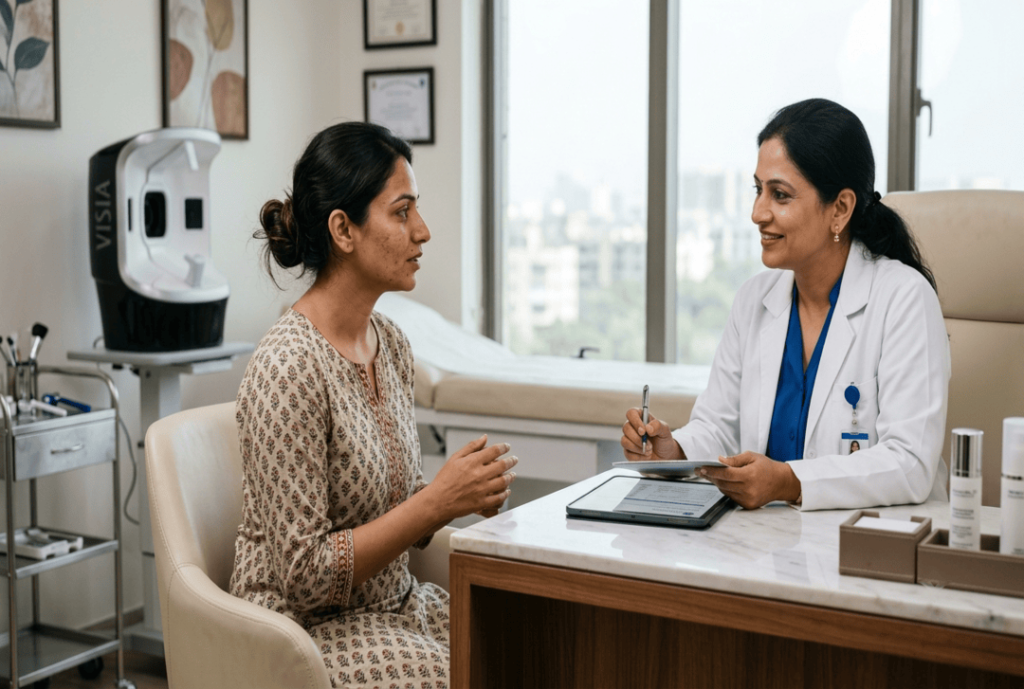
The first step in a standard skin clinic appointment is a discussion of your health condition and lifestyle.
Medical and Lifestyle Conditions:
- Your sleeping patterns, stress levels, eating habits, and daily water intake.
- Your work conditions, including exposure to sun or air-conditioned rooms daily.
Objective Setting:
- Identifying your main issues, whether they are anti-aging care, oil control, or texture refining.
- Establishing reasonable deadlines for noticeable skin improvements.
2. Digital Professional Skin Analysis
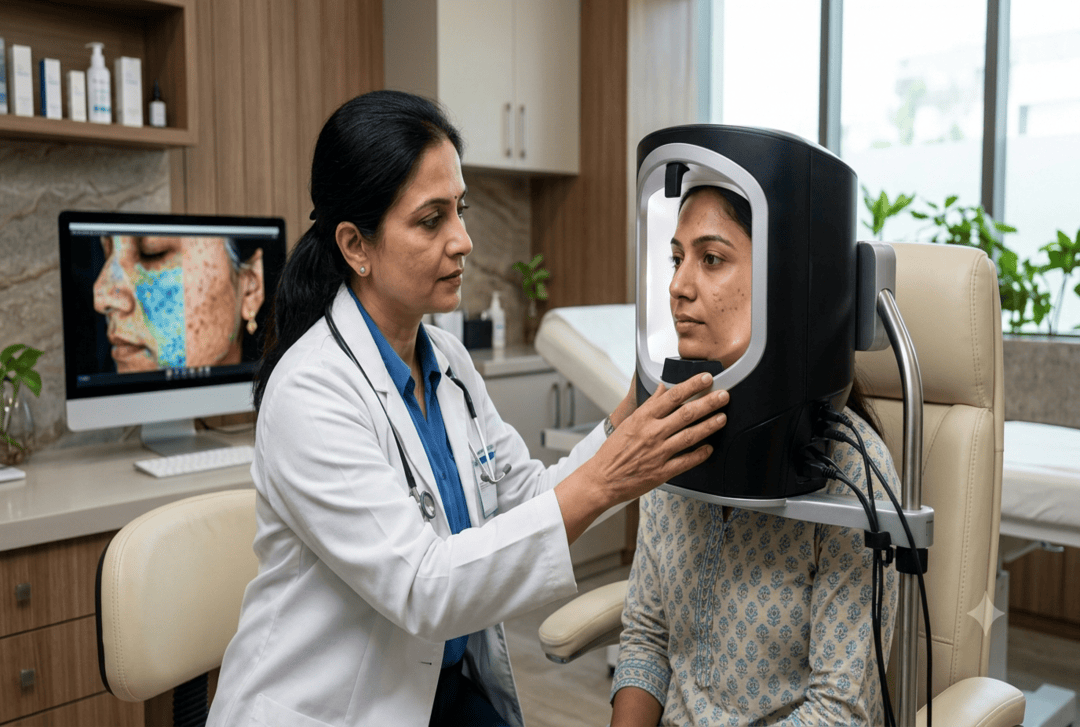
The skin clinics of today employ the use of modern 3D cameras to analyze the deeper layers of the skin.
Multispectral Imaging Technology:
- Taking photos using a high-definition camera in polarized and UV light spectrums.
- Quantification of sub-surface Melanin, Porphyrin (acne-causing bacteria) concentrations and sunspots.
Objective Baseline Data Collection:
- Making a visual baseline to objectively analyze your skin’s progress in the future.
- Detecting inflammation before it manifests itself in the form of redness or acne. Advanced tools like dermoscopy further enhance precision in identifying sub-surface skin conditions.
3. Practical clinical skin evaluation
This is where your dermatologist will practically examine your skin structure during your clinical skin evaluation.
Tactile Examination:
- Skin Elasticity, Hydration, and Barrier Strength Test through touch.
- Palpation of the congested areas to identify whether it is an obstructed pore, closed comedones, or inflammatory cysts.
Diagnosis Confirmation:
- Your exact skin type (for example, dry, sensitive, oily, or combination dehydration).
- Detection of reactive sensitivity to identify clinical ingredients your skin reacts to.
What Treatments to Expect During Your First Visit
During the first visit, a reputable skin clinic usually concentrates on diagnosis; however, minor first treatments are frequently carried out.
| Treatment Type | Ideal For | Key Benefits | Expected Downtime |
| Hydrating Medical Facial | Dehydrated, dull, or stressed skin | Deeply cleanses pores and restores essential moisture levels | Zero downtime |
| Mild Enzyme / AHA Peel | Mild texture, congestion, surface dryness | Gently dissolves dead skin cells for immediate brightness | Slight flaking for 24 hours |
| LED Light Therapy | Active breakouts, subtle inflammation | Kills acne-causing bacteria and accelerates tissue repair | Zero downtime |
| Barrier Repair Treatment | Sensitive, compromised skin barriers | Soothes irritation and locks in essential lipids | Zero downtime |
Why Are Aggressive Treatments Not Done Immediately?
- A professional skin clinic will usually not carry out aggressive chemical peels or intense laser resurfacing during your very first visit.
- Your skin barrier needs to be prepared with the use of home care products to prevent any risk of hyperpigmentation.
Comparing Home Care vs. Professional Clinic Care
Learning about how a skin clinic will complement what you do at home in the comfort of your own daily routine will allow you to create an effective balance for your skin care.
Daily At-Home Skincare
- Consists of daily maintenance, protection (SPF), and gentle moisturizing of your skin.
- Helps to maintain the results obtained from your dermatology clinic visit.
- Consists of non-prescription and prescription daily actives in low concentration.
Professional In-Clinic Skincare
- Involves the use of special devices and potent formulas that affect the deeper layers of your skin.
- Includes clinical correction of persistent problems such as scars or hyperpigmentation. Treatments like laser toning and micro-needling represent some of the most clinically effective in-clinic options for skin correction and rejuvenation.
Essential Questions to Ask Your Practitioner
A visit to a skin clinic is a dynamic process; hence, prepare yourself with pertinent questions to ask.
Questions Related To Your Diagnosis:
- “What is the main reason for my skin condition?”
- “How long does it take before improvements can be seen through this treatment program?”
Questions Related To Safety Of The Treatment:
- “Are there any side effects and downtime involved with this procedure?”
- “How should I alter my daily home regimen before and after my next clinic visit?”
Questioning effectively in a skin clinic makes sure that you are well-informed throughout your experience. Our complete guide on what a skin specialist does can also help you understand what services and expertise to expect from a certified dermatologist.
Key Takeaways for Readers
- Importance of Preparation: Come in bare-faced with a prepared list of all the products, medications, and medical background you have.
- Diagnosis Before Treatment: Get a complete assessment with digital imaging and palpation before going for any major procedure.
- Persistence is the Key to Success: Clinical changes to your skin do take time, and aggressive treatments need appropriate preparation at home. Our guide on choosing the best skin clinic will help you ensure the clinic you select follows these evidence-based clinical protocols.
- Fundamentals of Treatment: The procedures done in clinic give big structural changes to your skin, while the home care ensures these results.
- Communication is the Key: Ask questions about the duration of recovery after treatment and other important aspects.
Conclusion
The decision to visit a skin clinic is one of the best moves that you will make regarding your future confidence and skin health. The visit, from the moment of digital imaging through homecare regimens, makes all of the guesswork out of the window and replaces it with solid science. Knowing what to expect from a consultation makes you enter the clinic with full peace of mind, knowing that the experts take care of your skin.
The Skinstitute believes in each person’s individuality when it comes to aesthetic wellness and skin care. With the help of a team of experts and high-end technology, we ensure that your skin receives a unique and scientifically proven approach. At Skinstitute, we are committed to providing our patients with comprehensive guidance through the whole process of aesthetic skin treatment. Whether it is your first time visiting a skin specialist or you are exploring advanced options like laser treatments, Skinstitute ensures every step is safe, evidence-based, and tailored to you. Book your consultation today and experience the Skinstitute difference!
Frequently Asked Questions (FAQs)
1. What should I bring to my first skin clinic visit?
Bring a list of your current skincare products, medications, known allergies, and any previous treatments or reactions — and arrive with a clean, makeup-free face.
2. Will I receive treatment during my first skin clinic appointment?
Most first visits focus on diagnosis and consultation, though mild introductory treatments like LED therapy or a gentle peel may be offered depending on your skin’s condition.
3. Why don’t skin clinics perform aggressive treatments on the first visit?
Aggressive procedures require the skin barrier to be prepared in advance to reduce the risk of hyperpigmentation, irritation, or adverse reactions.
4. How long does a first skin clinic consultation typically take?
A thorough first consultation including digital imaging, medical history, and clinical examination usually takes between 30 to 60 minutes.
5. How do I know if a skin clinic is professional and trustworthy?
Look for board-certified dermatologists, FDA-approved equipment, transparent pricing, digital diagnostic tools, and verified patient testimonials before booking.
