


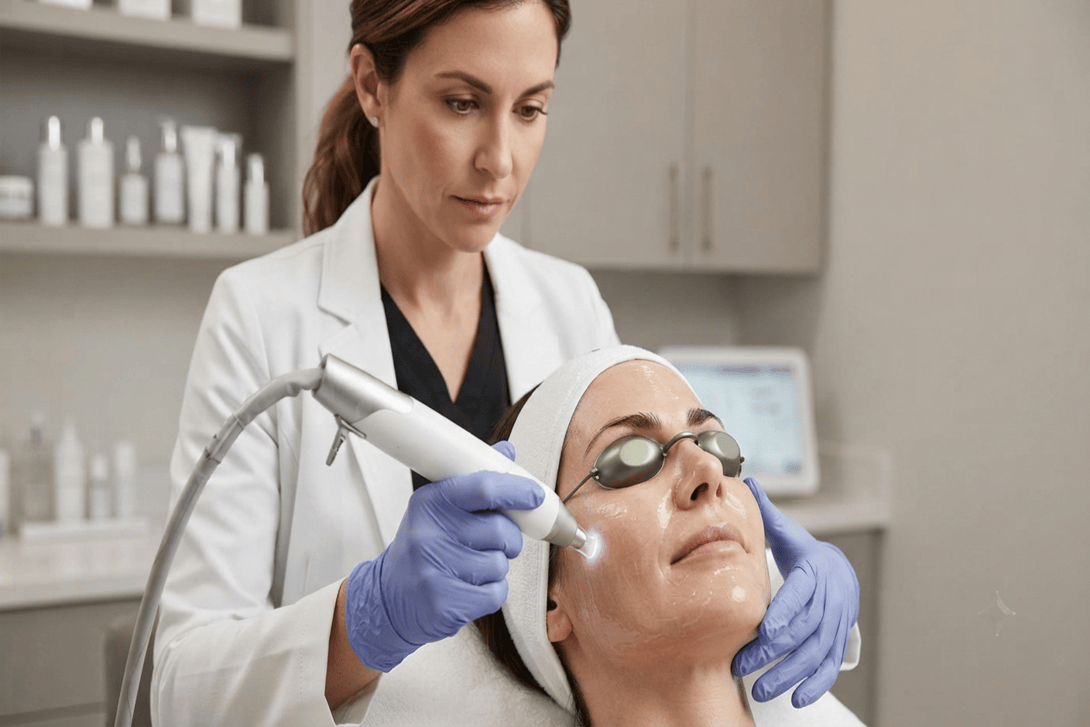
Constantly breaking out, painful cystic lesions, and residual post-inflammatory scarring can make your hunt for the right clinical treatment regimen a tiresome ordeal. Weighing up the options regarding laser vs chemical peel for acne treatment, along with the use of prescription topical or oral medications, can be quite baffling.
The fact of the matter is that there isn’t one dermatological solution that will work the same way for everyone. Conducting a comparative study of the effectiveness, principle of action, and recovery process of laser vs chemical peels for treating acne, as well as determining where clinical medication comes into play, is the way to go. Our detailed guide on laser treatment for acne is a great starting point for understanding how light-based therapy addresses the biological roots of breakouts.
Understanding How Different Acne Treatments Work
The decision about which treatment to choose should be based on the origin of your problems: excessive sebum production, bacterial growth, accumulation of dead skin cells, or inflammatory conditions.
- Medicines: There are prescription retinoid drugs, antibiotics, oral isotretinoin and benzoyl peroxide that help internally or externally to control skin cell growth, unclog pores and kill bacteria that cause acne.
- Chemical peels: Professional chemical solutions contain certain kinds of hydroxy acids to remove dead surface cells, unclog hair follicles, and decrease post-acne hyperpigmentation.
- Laser therapy: The laser procedure is aimed at destroying deep dermal layer bacteria and sebaceous glands and stimulating collagen synthesis that reduces acne scars. A detailed comparison of RF vs laser vs electrocautery can further help you understand which energy-based technology suits your skin concern best.
Evaluation of laser and chemical peel treatments for acne can be useful for dermatological treatment as well.
Deep Dive: Laser Therapy for Active Acne and Scarring
Light therapy employs very particular light waves to inhibit active acne eruptions and resurface textural acne scars at the same time.
Benefits of Light Therapy
- Sebaceous Gland Targeting: Particular light waves go deeper into the dermis layer to decrease the size of oil glands and decrease their activity.
- Eliminates Bacteria: Light energy destroys deeply situated bacteria without the need for daily antibiotic treatment.
- Scar Resurfacing: Fractional laser treatment boosts collagen formation in order to elevate acne scar tissue like ice-pick scars, pitted scars, or boxcar scars over several sessions. Our guide on acne scar surgery explained covers which procedure is right for each scar type.
Is Laser Acne Treatment Safe?
- High Safety Rate: The question is laser acne treatment safe is answered by clinical evidence proving its high safety if done by a qualified dermatologist.
- Low Risk Factor: When discussing is laser acne treatment safe, it means taking into account possible side effects like slight redness, warmth, and swelling.
- Calibration Accuracy: When discussing laser acne treatment safe for dark skin, particular light waves such as Nd:YAG should be used.
Laser Treatment for Active Acne
- Inhibits Inflammation: Application of laser for active acne stops inflammation in red papules in a very fast way by targeting deeper vascular structures.
- Prevents Future Breakouts: Use of a laser for active acne prevents cyst formation in the future by destroying overactive oil glands.
- Option For Those Who Cannot Take Pills: Use of a laser for active acne gives a good alternative for people who cannot take oral pills.
Laser Treatment for Acne Side Effects
- Flushing Effect: Some of the common laser treatment for acne side effects include mild flushing and tightness effects lasting for several hours.
- Skin Flaking: Laser treatment for acne side effects like light peeling means that the surface skin cells are turning over rapidly.
- Reducing Side Effects: The side effects of laser treatment for acne need strict sun care and gentle barrier creams after treatment.
When you consider these points while choosing between laser vs chemical peel for acne treatment, you can set reasonable expectations about the process.
Deep Dive: Chemical Peels for Breakouts and Pigmentation
Chemical peeling is a very flexible clinical approach that provides an accessible treatment for surface congestion and skin discoloration.
How Do Chemical Peels Help with Breakouts?
- Cleans Clogged Pores: Salicylic acid dissolves excess oil in clogged pores, whereas glycolic and lactic acids peel off surface skin cells.
- Helps with Acne Scars: Stimulating surface cell renewal makes it easier to diminish dark post-acne scarring caused by healed breakouts.
- Short Application Time: The standard chemical peel’s application time takes less than half an hour and does not require much time. For a side-by-side breakdown of both options, our comparison of micro-needling vs chemical peels is a helpful read.
Things to Know before Selecting Chemical Peels
- Superficial Treatment: Mild and medium chemical peels are mainly used to address surface-level acne and surface discoloration without addressing deeper ice-pick scarring.
- Multiple Treatments Needed: To achieve an ideal result from peels, four to six sessions are required with a few-week interval between them.
An analysis of how laser and chemical peels help with acne skin smoothing explains the advantages of chemical peels for surface congestion and discoloration.
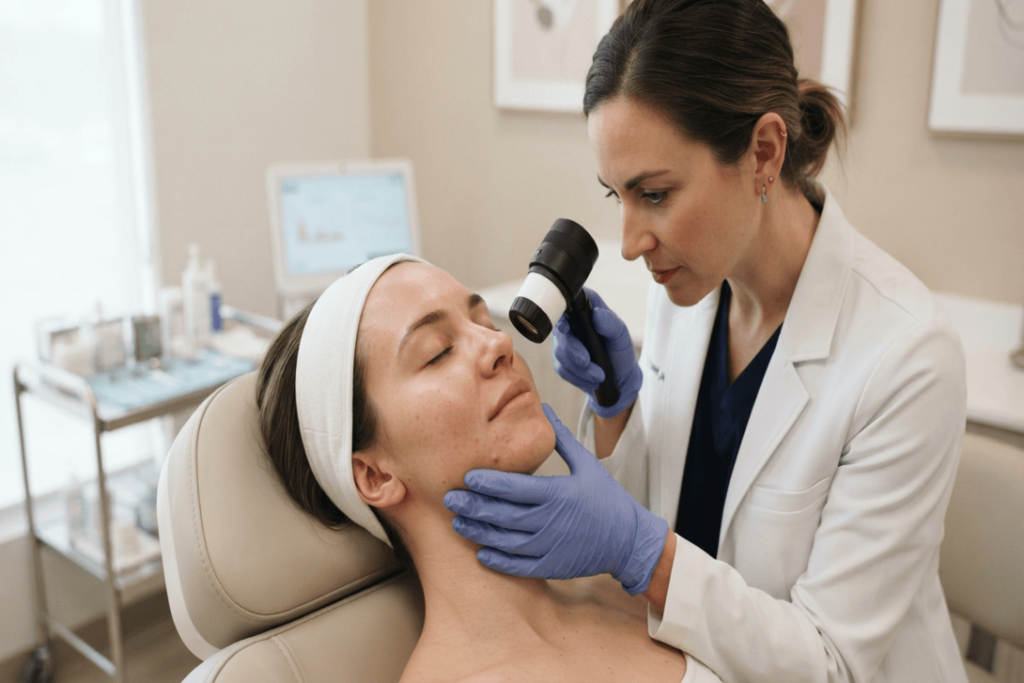
Deep Dive: Prescription Medications for Acne Management
Traditional prescriptions are considered the cornerstone in the treatment of moderate-to-severe cystic acne from an internal perspective.
- Topical Retinoids: Stop the formation of micro-comedones by regulating skin cell turnover in the hair follicle.
- Oral Antibiotics: Give temporary respite from widespread papules and pustules by inhibiting bacterial proliferation.
- Hormonal Treatment: Regulate oil gland secretion stimulated by androgens in female adult acne.
- Oral Isotretinoin: Provides extended remission in severe resistant cystic acne by reducing sebaceous gland size.
Although drugs successfully prevent breakouts from emerging, they cannot heal post-acne scarring. That is why patients often proceed to a laser over a chemical peel for acne treatment after clearing up the active inflammation. Understanding how dermatologists diagnose acne first is key to determining which treatment path is most appropriate for your specific condition.
Comparing Advanced Treatment Options
The choice of either light therapy, acid peel, or medication will depend on what your priority is, how much money you are willing to spend, and how long you are prepared to recover.
Reviewing Acne Treatments
- Acne Treatment Understanding: Choosing among available modern acne treatments implies determining whether your breakouts are comedonal, inflammatory or hormonal.
- Combining Acne Treatment Regimes: Efficient acne treatments often involve mild prescription medication and in-clinic chemical peels or carbon laser sessions.
- Customizing Acne Treatments: Professional acne treatment is tailored to your skin type, sensitivity, and personal preferences.
Selecting the Most Appropriate Treatment for Acne Scars
- Resurfacing Scars with Indentations: The most appropriate treatment for acne scars that present deep boxcar or rolling indentations is fractional laser treatment. Our guide on acne scar surgery treatment in Bhubaneswar covers scar type-specific options in detail.
- Eliminating Post-Inflammatory Hyperpigmentation: The most appropriate treatment for acne scars that appear as flat post-inflammatory hyperpigmentation includes chemical peels and light therapy.
- Long-Term Production of Collagen: The most appropriate treatment for acne scars involves remodeling of tissues inside skin during several months.
Selecting between a laser vs Chemical Peel for acne treatments depends on the issue of priority, oiliness, surface discolouration or pitted scarring.
Key Takeaways for Readers
- Approach with Layers: The contrast between laser and chemical peel for acne treatment reveals that the latter treats surface congestion while the former addresses deep oil secretion and scarring.
- Alternative Treatments: Reviewing choices of acne treatment options provides dermatologists with opportunities to use topicals, peels, and light tools safely.
- Safety of Procedures: Determination of whether laser acne treatment is safe lies in correct skin typing, use of approved tools and aftercare instructions. Always visit a certified skin clinic for any laser or peel procedure.
- Control of Acne: Use of a laser for treatment of active acne reduces bacterial activity and regulates overproduction of sebum without oral medications. Our detailed guide on laser acne treatment in Bhubaneswar covers all available clinical options.
- Acne Scar Treatment: Selection of the best treatment for acne scars means picking up fractional lasers for deep scars and chemical peels for dark surface marks.
- Side Effects Management: Knowledge of common side effects of laser acne treatment enables patients to handle post-procedure redness and flakiness.
Conclusion
The decision whether or not to go for a laser as compared to a chemical peel in case of treatment of your acne would depend on the existing state of your skin, your goals, and your schedule. Chemical peel gives you the greatest relief when it comes to congestion, excess oil, and pigmentation problems after acne. Using a laser in order to deal with active acne can provide you with deep treatment of your skin that will reduce sebum production and eliminate inflammation. Consulting an excellent dermatologist about modern acne treatment options and how laser acne treatment is safe for your skin type will help you to get the best treatment for acne scars and avoid all possible side effects from your treatment.
Skinstitute believes that having clear skin is a result of professional consultation, an individual approach, and clinical procedures. Our clinical platform allows patients to consult with our professional dermal specialists to choose the best combination of chemical peels, laser treatments, and skincare programs. Book your consultation today and take the first step toward clear, expert-led skin care at Skinstitute.
Frequently Asked Questions (FAQs)
1. Which is better for acne — laser or chemical peel?
It depends on your concern; laser works better for deep bacterial acne and scarring, while chemical peels are more effective for surface congestion and post-acne pigmentation.
2. Is laser acne treatment safe for Indian skin tones?
Yes, when the correct wavelength such as Nd:YAG is used by a qualified dermatologist, laser acne treatment is safe and effective for darker Indian skin tones.
3. Can laser treatment replace acne medication?
Laser treatment can be an excellent alternative for patients who cannot tolerate oral medications, but a dermatologist will decide the best approach based on your skin condition.
4. How many sessions of laser or chemical peel are needed for acne?
Most patients require 3–6 sessions of either treatment, spaced 2–4 weeks apart, for significant and lasting acne improvement.
5. What are the common side effects of laser acne treatment?
Common side effects include mild redness, flushing, warmth, and light flaking, all of which resolve within a few days with proper aftercare.
